My observations on being vegetarian, interspersed with vegetarian/ vegan/ raw food recipes, new food experiences and related stories.

Vegan Pumpkin Pudding

Ingredients:
1 lb silken tofu
1/2 tsp salt
2/3 cup maple syrup
1 cup canned pumpkin, unsweetened
3/4 tsp cinnanom
1/2 tsp mace
1/2 tsp nutmeg

Blend all ingredients in a food processor. The pudding may be a bit runny but will firm up in the fridge.

Pour into four serving dishes

Top with whipped, sweetened coconut milk (or for non-vegan—fresh whipped cream). To make the whipped coconut milk you will need a whipped cream dispenser. This is the one I use from WhipRite: http://www.creamright.com/product/WCD-AM-300BA-AL.html

Pour in chilled, low or full fat coconut milk with a couple of tablespoons of maple syrup. Shake very well to firm up the cream.


Serves 4

Nutritional Breakdown Per Serving (without topping)

   248 Calories
   6 g Fat (20.0% calories from fat)
   10g Protein
   43g Carbohydrate
   3g Dietary Fiber
   0mg Cholesterol
   283mg Sodium

Easy Bean Curry

Ingredients:
1 tablespoon oil
1 teaspoon mustard seeds
1 teaspoon cumin seeds
1 large onion, chopped
1 tablespoon grated gingerroot
1 tablespoon curry powder
4 cloves garlic, chopped
1 large (28 oz) can diced tomatoes
2 cans (19 oz each) beans (drained and rinsed)(lentils, kidney, romano etc.)
1 teaspoon (or more!) curry paste

Directions:
Heat oil in large pot over medium heat and stir fry the mustard and cumin seeds until they pop. Add onion, ginger, garlic and curry powder and stir fry until lightly colored. Add tomatoes with juice, beans and 1 tsp curry paste (to start!). Simmer for about 20 minutes or until thick and saucy. Keep adding curry paste to taste during the cooking.

Serve with rice, pita, toast, chapattis, or nan.

Serves 6

Nutritional Breakdown Per Serving

  221 Calories
  4 g Fat (15.3% calories from fat)
  11g Protein
  37g Carbohydrate
  14g Dietary Fiber
   0mg Cholesterol
   835mg Sodium

Enjoy Those Schweddy Balls

Anyone who remembers the Saturday Night Live skit with Alec Baldwin and Molly Shannon talking about the Schweddy Balls will love this!

Ben and Jerry's have immortalized the skit with a new ice cream flavour called—"Schweddy Balls".Courtesy of Ben & Jerry's

Note: according to Ben and Jerry's web site, all their ice cream is vegetarian-no meat products used in production.

Nutritional Yeast

I friend at work told me about using nutritional yeast as a protein supplement. I've been using it for about 1 and half years now and I must say it took a bit of getting used to.

First strike against it: The name!
YEAST...that you eat...come on! This doesn't sound palatable at all. When you add the word Nutritional in front it sounds even more gross.


Second strike: The look!
Have you ever had tropical fish as pets? I have. I would feed the them flake food, I think it was called Tetra Min. It smelled like very strong fish. Well nutritional yeast looks exactly like that fish food except it's a pale to bright yellow colour—thankfully without the strong, fishy smell.

Third strike: How it's made!
Nutritional yeast is an inactive yeast and is grown specifically for its nutritional value. Like edible mushrooms it a fungus, howver this type is grown on molasses. It is produced by culturing the yeast with a mixture of sugarcane and beet molasses for a period of 7 days and then harvested.(Wikipedia)

Despite all that, it has an OK flavour, reminiscent of nuts or cheese. High in B12 and protein, it makes a great vegan substitute for Parmesan cheese.

Tomatoe Pie

If you grow tomatoes and find yourself overwhelmed with excess...this is an great recipe to use em up. It's reminisant of a deep dish, cheese pizza. I've had people pile on the compliments, even when they normally don't comment recipes.


Tomatoe Pie
1 9-inch pie shell
1 large yellow or red onion, chopped
3 cups roughly chopped tomatoes, squeezed to remove excess juice
1/4 cup choped fresh basil
3 cups grated cheese (any mixture of vegetarian sharp cheddar, parmesan, monterey Jack, Gruyere or Mozarella)
3/4 cup low fat mayonnaise
1 teaspoon Hot Sauce (or Tabasco)
Salt and freshly ground black pepper

Preparation:
The recipe calls for the pie shell to be baked and then cooled first. Since the pie is going to be baked in the oven for about 20-30 minutes, I figured that I could used a slightly cooked shell. I'm certain a raw crust would be OK but I havn't tried it yet.

Spread the onions evenly on the bottom of the shell. Next, layer the drained, chopped tomaotes and finally spread the fresh basil on top.

In a bowl mix the mayonnaise, cheese, hot sauce, salt and pepper. Spread this mixture, as the final layer over the pie.

Bake in the oven for 20-30 minutes at 350 degrees C.

Being Vegetarian Does NOT Mean you are going to be Skinny!

I am constantly astounded by the number of ads and media that drills into our heads that veganism or a vegetarian lifestyle is a guaranteed way to lose weight. Peta is the worse culprit of this misconception as their "Save the Whales" campaign demonstrates.


OK, perhaps if you constantly stuff your face with burgers, chicken wings, fish fries, and cheese then changing to a vegetarian lifestyle will cause you to loose weight—but this will happen not because you've sworn off animal products but because your calorie content is lower. That's it!!

If you eat well already—eating low fat cuts of meat, fish, low fat dairy and vegetables—you probably will NOT lose weight on a vegetarian diet.  Especially if you substitute animal protein—low fat cuts of meat, fish etc—for high fat dairy products. You may even gain weight.

So if you think you are going to be skinny by switching to veg, take an honest look at how you eat now (and look at your calorie intake). If you calculate that you'll be taking in less calories by going veg, then you'll have success in losing weight this way. The calories will tell!

Remember—cows can get fat by eating only grasses.

Swiss Chard Pesto

When I here the word "pesto" I always think of the basil, parm and pine nut variety. I've heard of substituting the parm with asiago or romano or using blanched almonds instead of pine nuts, but when I came across a recipe that uses swiss chard in it, I was intrigued. This recipe maintains the basil with the added bonus of the chard. I have lots of swiss chard growing in the garden and haven't had a chance to use it at all this summer so this was the perfect opportunity!!

Ingredients:
2 tablespoons extra virgin olive oil
2 cups Swiss chard, with lower stems removed
3-4 cloves garlic, chopped
1 cup walnuts
2 ounces freshly grated pecorino or parmesan cheese (vegetarian variety)
1/2 cup of packed basil leaves
1/2 cup extra virgin olive oil

Directions:
Heat up 2 tablespoons of olive oil and wilt the chard leaves in the oil. remove from heat and let cool.
In a food processor combine the garlic, walnuts, basil and cheese. Pulse until the mixture is finely ground and mixed. Add the cooled, swiss chard and mix well.
Pour in the olive oil and mix until fully blended. Refrigerate or freeze.

Ginger Pumpkin Bisque

The word "bisque" traditionally is used to describe a soup made with lobster or shell fish of some sort. Alternatively it is can be used to describe soup made with roasted vegetables. For this recipe I used roasted pumpkins instead of the canned variety therefore—bisque!

Possible Recipe Substitutions:
Olive Oil: Pumpkin seed oil can be substituted for the olive oil. It will give your soup a darker colour and a deeper flavour.
Shallots: The recipe also calls for 3/4 cups of shallots. If you don;t have them handy (or don't want to pay the crazy price) you can use one of the following substitutions:
  • 3/4 cup sweet onion + 2 tablespoons chopped garlic chives
  • 1/2 cup regular cooking onions + 1 crushed clove garlic
Apple Cider: The 1/2 cup of apple cider can be substituted for any one of the following
  • 1/2 cup beer
  • 1/2 cup apple juice
  • 1 medium apple (juiced)

Ingredients
1 tablespoon olive oil or pumpkin seed oil
3/4 cup chopped shallots
1/2 cup chopped onion
1 tablespoon grated fresh ginger
1/4 cup unbleached flour
4 cups vegetable
1/2 cup apple cider
1 (15- or 16-ounce) can pumpkin or 4 cups fresh, cooked pumpkin
1/4 cup pure maple syrup
2 bay leaves
1 teaspoon dried thyme, crushed
1 teaspoon dried sage, crushed
1/8 teaspoon ground cinnamon
1/16 teaspoon ground cloves
1/2 cup half-and-half or whipping cream

Topping (optional)
Whipping cream or low fat sour cream
Fresh thyme


Heat oil over and add the shallots, onion, and ginger; cook until tender.
Stir in the flour and cook for 1-2 more minutes. Pour in the broth and cider all at once, stirring constantly to avoid lumping. Cook and stir over until thickened and bubbly.
Mix in the pumpkin, maple syrup, bay leaves, dried thyme, cinnamon, pepper, and cloves.
Bring to boiling; reduce heat. Simmer, covered, for 20 minutes.
Remove from heat. Discard bay leaves. Cool slightly.
Blend the mixture in batches using a blender or food processor.
Once the entire lot is smooth, return it to the saucepan and stir in the cream.
Heat through, but do not boil.

When serving, swirl a little sour cream (or whipping cream) into each bowl and garnish with fresh thyme.
Makes 6 servings

Is your wine vegetarian?

It would be a natural assumption that all wines are vegetarian, right? They are made from grapes and other additives that are not animal based.

WRONG!

Unfortunately some wineries will use an animal-based product called finings to remove the small impurities in the wine. Since most finings do not remain in the wine, the wineries do not need to list the finings as an ingredient. Because of this you will not know if the wine you are drinking is vegetarian unless you direct questions to the manufacturer.

Luckily there are web sites that already have that info:
Unfortunately, many wine makers change their recipes from year to year so a wine that is deemed vegetarian one year, may not be in the next.

Goat Cheese, Tomato and Arugula Pasta


Arugula growing in my garden
 This year was the first time I've planted arugula. The stuff is growing like wildfire and is crazy-ass hot (spicy)!! It's so strong tasting that I can't imagine using it in a salad so this recipe is perfect.


Ingredients
5 1/2 ounces goat cheese, crumbled
2 cups coarsely chopped arugula, stems included
1 1/2 cups halved cherry tomatoes
1/4 cup olive oil
2-3 cloves of minced garlic
salt and pepper to taste
8 ounces penne pasta

Directions
Cook pasta until al dente.
Combine goat cheese, arugula, cherry tomatoes, olive oil, garlic, and salt and pepper in a large serving bowl.
Drain pasta and toss with goat cheese mixture.

New Marketing that Reveals Animal Welfare

I recently tweeted about a new rating system that is being introduced by Whole Foods Market.
The system shows a 5-step animal welfare chart. The plan is to color code labels on all animal products so that consumers can make informed chocies when purchasing these products.

Although this doesn't prevent cruel conditions, it could send an important message to the farmers if this catches on.

Garlic Bok Choy Stir-fry

I know this sounds wierd, but I frequently have extra bok choy in ny fridge that needs to get used up. This is a quick and tasty side dish. It calls for brown sugar however you can substitute any sweetener that you prefer.

Garlic Bok Choy Stir-fry

1 teaspoon sesame oil
1 tablespoon olive oil
1 onion, chopped
2 garlic cloves
1 tablespoon ginger, freshly grated
2 cups shiitake mushrooms, chopped, stems removed
6 cups bok choy, chopped into 2 inch strips
2 red pepper, sliced into thin strips
2 tablespoons tamari sauce
1 tablespoon lemon juice  or white wine
1 tbsp brown sugar (or maple syrup for vegan)
1/4 cup cashews or raw peanuts for garnish

Preparation:
In a pot, heat up the sesame and olive oil.Add the onion  and cook until soft.
Add the mushrooms, garlic, ginger and red peppers. Cook until peppers are just beginning to soften.
Add the remaining ingredients, and cover for two to three minutes to steam bok choy.

Serves 6

Nutritional Breakdown Per Serving

  331 Calories
  7g Fat (15.5% calories from fat)
  11g Protein
  69g Carbohydrate
  11g Dietary Fiber
  0mg Cholesterol
  394mg Sodium

Curried Carrot and Ginger Soup

I'm not too fond of cooked carrots however I needed to use up ~2 1/2 lbs of carrots. I didn't have enough carrots to juice for this recipe so I decided to modify a soup recipe from the Oprah web site:

Curried Carrot and Ginger Soup 
1 tablespoon olive oil
1 onion, chopped
1 stalk celery, chopped
4 cloves garlic, chopped
2 1/2 pounds carrots, scrubbed but unpeeled, cut into 1/2-inch thick rounds
1 tablespoon curry powder
1 tablespoon grated ginger root
5 cups vegetable broth
Salt and freshly ground pepper, to taste


Preparation:
Heat up the oil and add onion, celery and galic. Cook until softened. Add carrots, curry powder and ginger.
Mix well and cook for another minute or two.
Pour in broth and cook uncovered until the carrots are soft (approximately 30 minutes).
Puree the soup in a food processor or use an immersible hand blender.

You can serve the soup like this or add 1 cup plain nonfat yogurt or light coconut milk into the entire batch. I choose to stir in 2 tablespoons of non-fat sour cream into each serving.

Serves 6

Nutritional Breakdown Per Serving
 228 Calories
 6g Fat (22.4% calories from fat)
 7g Protein
 39g Carbohydrate
 8g Dietary Fiber
 2mg Cholesterol
 1410mg Sodium

On the menu today—Veggie Rolls

The first time I tasted a veggie roll made with rice paper, I was quite turned off. I was used to eating spring rolls and egg rolls that are deep fried. The filmy, see-through, sticky white rice paper seemed almost gross to me and it was quite a few years before I tried it again.  

Luckily I am a firm beliver in trying something at least three times before swearing it off totally. With that rule I find there are only a few things in the food realm that I absolutely do not like after multiple attempts—parsnips, herbal teas and cilantro (being top contenders) That being said, my second attempt at trying veggie rolls (with rice paper) met with better success.

 To buy one, pre-made Veggie roll at the sushi section in my local supermarket it costs about $5 (includes dip) for one roll. If you make them from scratch you could probably make 6-8 roll for the same price. Needless to say I have since started making them at home.

Here's how I make mine:

Veggie Rolls
6 large, round rice papers
6 leaves of romaine lettuce
3 avacados
1 large English cucumber
1 super large carrot (shredded)
1-2 tablespoosn of rice vinegar

Preparation:
You can purchase already shredded carrots, but it is cheaper to do it by hand. If you have a mandoline the slicing is made a bit easier.

Once shredded, pour a tablespoon or two of rice vinegar over the carrots and mix well. I will sometimes prepare this a day ahead, leaving the carrots in the fridge until I'm ready to put the rolls together.

When you are ready to assemble, then cut the ends off of the English cucumber then split in in half down the entire length. Split each half into three separate pieces, lengthwise.

Wash and pat dry enough romaine letuce leaves - one piece per roll.

To assemble:
Dip a single sheet of rice paper in water for about 20 seconds. Place the wet sheet on a large plate.
Place a single lettuce leaf  in the middle of the sheet. Line the middle of the leaf with the shredded carrot. Try to make sure that the carrots are not too wet from the rice vinegar (strain or pat dry if neccessary ). Place one piece of cucumber lengthwise down the centre and then place slices of avacdo along the strip of cucumber.

You are now ready to roll! Working with rice paper can be difficult but gets easier with practise. If the paper was soaked enough, it should be filmy and slightly elastic. Pull the paper as taught as possible while rolling, tucking the ends in as you go.


Goma—Sesame seed dressing
Enjoy with a Goma dipping sauce—a Japanese salad dressing that is made with sesame seeds.

Bad, bad Metro!

Although I enjoy cooking I tend to get a bit lazy when it comes to preparing lunches (who doesn't right?) Especially when it comes to making salads. Like many people I love eating salads for lucn but they take sooooo long to prepare, so I've gotten into a habit of buying a ready salad for lunch at a near by Metro store.

Today I fought hard against the urge to order Thai and stuck to my daily routine to buy salad. Once in the store though, I realised I did not want the regular greek salad that I usually get and decided to try something else. Metro usually does not have a variety of vegetarian salads so I was skeptical that I would find something. Every salad tends to have meat in it...even their spinach salad has bacon bits! (That should have been my warning!!) Looking through the "wall" of salads I came across their "Supreme salad" WOW...supreme...with no meat!. I could see lettuce, cukes, cherry tomatoes, yellow, orange, red and green peppers and walnuts. I was hooked. I double-checked the label. Nope...no meat!

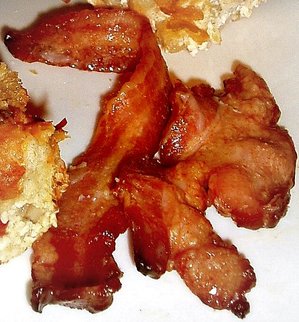
Pleased with myself that I had stuck with routine, I headed back to work anticipating an enjoyable lunch. After a several bites I soon realised my mistake. I bit of digging into the mound of veggies, I unearthed a huge center of bacon bits!  I realised that a past prediction had come true.

Bad, bad Metro!! If you are going to include bacon bits please make them visible OR label your salads accordingly

Squash Couscous

This recipe is adapted from a 2001 LCBO Food & Drink magazine. I like to bring this to BBQ parties as an alternative to meat. Couscous is "high" in protein and therefore a tasty alternative. The original recipe calls for acorn squash, however I prefer the creamier consistency of the buttercup. Because it is a drier squash, I add a bit of vegetable broth to soften it up.

Squash Couscous
1 tbs. olive oil
2 cups diced buttercup squash
2 cups diced red pepper
1-2 tsp curry powder
1/2-1 tsp paprika
2 cups frozen peas, cooked (can substitute edamame for peas)
2 cups couscous
2 cups vegetable stock (if you use whole wheat couscous then you will need 2 1/2 cups of stock)
6 green onions, chopped
1/2 cup pine nuts

Heat oil  in a pan and add squash. If using buttercup, cook for a few minutes then add a couple of tablespoons of broth or water to help soften the squash. Add peppers and cook mixture until softened.Stir in curry and paprika and cook for another couple of minutes.
Cook peas in the microwave and drain. Set aside.
Heat vegetable broth in a pot or microwave until boiling. Place couscous in a large bowl and pour broth over it. Mix well then cover the bowl and let it site for 5 minutes.
When the couscous is ready, uncover and mix with a fork. Add pea, squash mixture and pine nuts. Stir until well mixed. Serve warm or cold.

Serves 8

Nutritional Breakdown Per Serving

   323 Calories
   8g Fat (21.0% calories from fat)
   12g Protein
   53g Carbohydrate
   7g Dietary Fiber
   1 mg Cholesterol
   417 mg Sodium

Better than plain rice....

We make chimichangas at least once a month. Typically we just have a chimi each with a glass of wine and that's our meal, but for some variety we'll have sides of green salad and rice.

I'm getting bored with plain rice so I recently started using this rice recipe that has a bit more flavour (and veggies). It's great on it's own as left overs, cold, for lunch.

Rice with Black Beans and Corn
6 cups cooked jasmine rice (use brown rice if preferred)
1 (15 ounce) can black beans, rinsed and drained
1 1/2 cups of frozen corn, heated and drained
4 fresh tomatoes, diced
6 green onions, chopped
2 tablespoons fresh lime juice
1 tablespoon olive oil
1/2 teaspoon salt
1/4 teaspoon fresh ground pepper

The recipe also calls for:
1/2 cup chopped cilantro
1 jalapeno pepper, seeded and diced
2 dashes hot sauce
Because I serve this as a side dish, I don't want it to be hot so I don't add the jalapeno or hot sauce.
Also,  I HATE cilantro so of course I don't add it, however many people love this herb so add what you want.

Preparation:
In a medium bowl, combine black beans, corn, tomatoes, onion, lime juice, oil, salt, pepper. If you are including the extra ingredients (cilantro, jalapeno and hot sauce) add them now. Serve the hot rice with a 1/6 of the bean and corn mixture on top OR mix the rice with the bean/corn mixture before serving being careful not to make the rice too mushy during the mixing process.

Serves 6

Nutritional Breakdown Per Serving
    474 Calories
    4g Fat (7.9% calories from fat)
    13g Protein
    96g Carbohydrate
    7g Dietary Fiber
    0mg Cholesterol
    416mg Sodium

Fresh Basil Means Pesto Tonight!

There's somthing about the smell of fresh basil that always gets me thinking of pesto. Every summer I have at least three huge pots of basil growing on the balcony. During the winter months I'm reduced to purchasing "fresh" basil in the grocery store. This is a very expensive way to get basil so when I discovered that a local Asian market sold basil at "a dollar a bag" I now make bi-weekly purchases.

The best pesto is home-made pesto. I've tried (several times) the pre-made stuff from the grocery store and I've never liked it—I find that there's a "chemical" taste to it; something not natural.

Here's a simple recipe that I use. I always try to have some in my fridge. It's great for adding to sauces, sandwiches (with goat cheese and roasted peppers) or to have straight on pasta.

Pesto Sauce
2 cups fresh basil (packed)
1/4 cup of grated parmesan cheese (vegetarian variety)
1 cup of virgin olive oil
2-3 cloves of garlic (slightly chopped)
3 tbsp pine nuts

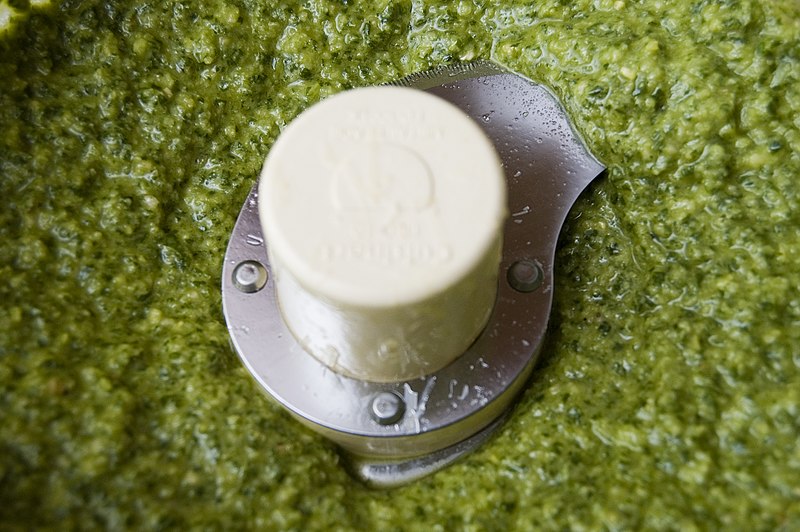
Blend all ingredients in a food processor until well mixed.
Store in the fridge, covered.

Edamame—Great for Snacking

A co-worker turned me on to Edamame. If you've never heard of it you are not alone.

Boiled Edamame


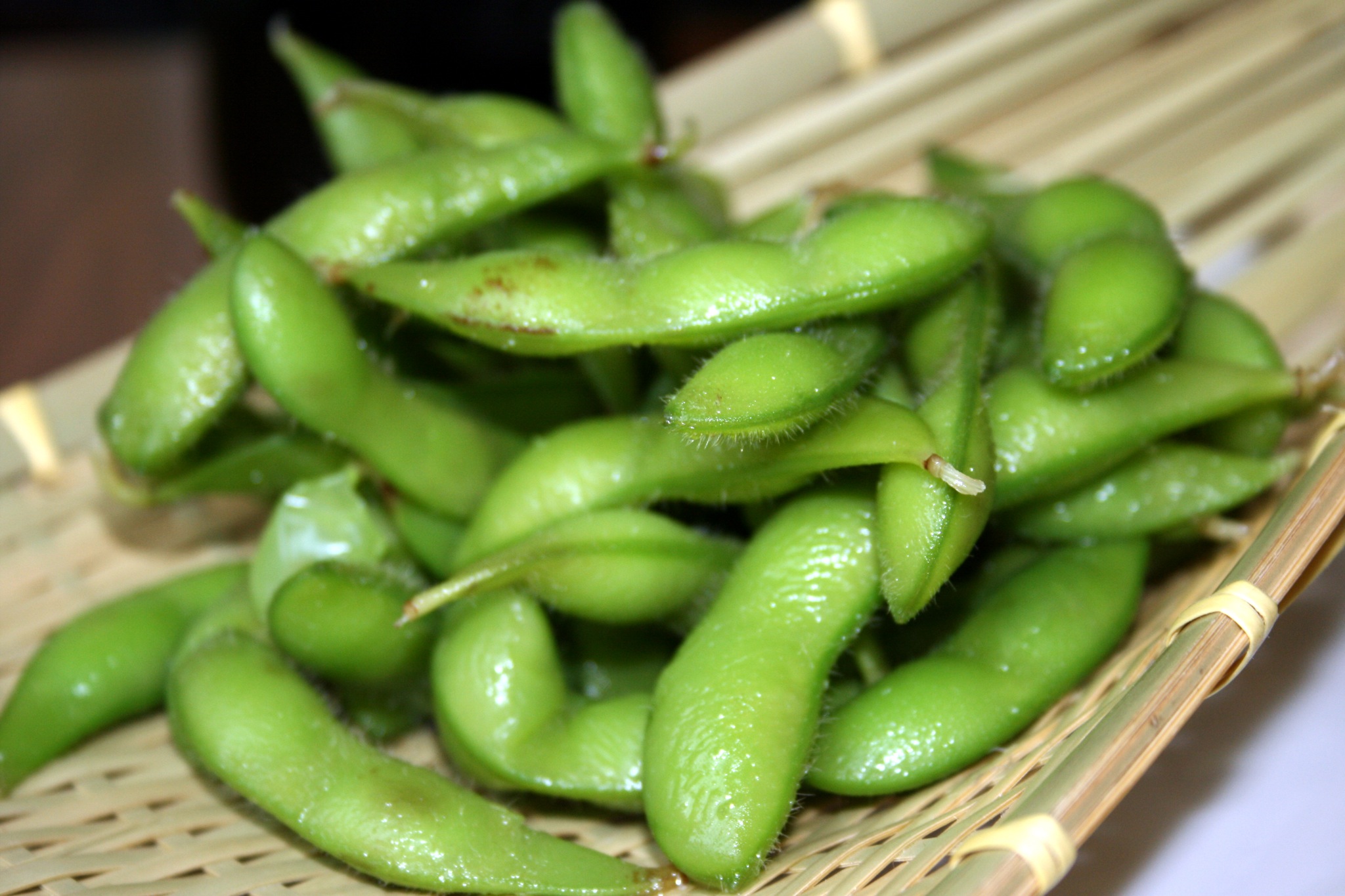
Edamame is the japanese term for immature "soybeans" that are still in the pod. You purchase the pods (fresh or frozen) and boil them in slightly salted water. Drain, and let cool. Pop the pods open and enjoy the beans inside.
454 gram bag of frozen edamame

The only place I've been able to find edamame is frozen, in an Asian shop. I usually boil up half the bag and place the pods in a bowl for snacking. They are a great source of protein!

Nutritional Information for 1 cup of pods (155g)
  189 Calories
  8g Fat
  17g Protein
  16g Carbohydrate
  8g Dietary Fiber
  0mg Cholesterol
  9mg Sodium
Edamame is also a good source of Calcium (10%), Vitamin C (16%) and Iron (20%)

Dragon fruit

Dragon fruit
I've noticed that dragon fruits are starting to pop up in local supermarkets. They are very colorful and very beautiful looking fruits. I can't image what they would look like growing in the wild, but I can understand how they got their name.

Their colorful exterior gives promise of an exotic taste experience. Unfortunately, for me that experience fell very short. 

I wasn't to keen on the taste! I found it very...blah..boring. I expected tangyness or a sweetness, maybe even sour but there was nothing; an unfulfilling blandness that I had a hard time getting past.

One of the recommended serving methods was to blend it in a drink. I guess that is one way to give it some flavour! 

My usual rule of thumb is to try something at least 3 times. If I still don't like it after 3 attempts, I've earned the right to turn my nose at it. In this case, I couldn't bring myself even to finish the other half of the fruit.

Dragon Fruit "seedlings"


Instead of throwing the fruit out, I decided to try and plant the seeds. The seeds inside the fruit are similar in looks to black sesame seeds, maybe slightly smaller. I scooped out the flesh and seeds and stuffed spoonfuls of the stuff into the soil of a few pots I had sitting around in the garden shed.

It took a while to grow, but the resulting plant is very similar to cactus and looks great. The 1/2 of the left over fruit didn't go to waste!!

These plants are about 1-2 years old.

Sprouted Oatmeal Cereal

Here's another "raw food" recipe that I have used quite a few times. It's for another breakfast cereal made from oat groats.

 The first main problem I had was actually finding oat groats. 
Oat Groats


Groats are essentially the hulled grains without much else done to them. It's easy to find rolled oats (oat groats flattened, pancake style), steel cut oats (the oats that Oprah is always talking about) but oats "aux naturelle"...no luck here. The closest I've come is toasted oat groats, which is not really what you want to use for raw food meals. No heat should be involved in the process...

Anyways, here's assuming you find them!


Sprouted Oatmeal
1 cup whole oat groats, soaked overnight in 2 cups of water then rinsed well before using
1/4 cup of agave syrup or pitted dates
1 tbp water
1/2 tsp cinnamon
1/4 cup raisins
1/ 4 cup walnuts

Place the oat groats, syrup (or dates), water, and cinnamon in a food processor.
Process the mixture until it is well mixed;resembling cooked oatmeal. Stir in the raisins and walnuts.

Serves 2

Nutritional Breakdown Per Serving
   380 Calories
   10g Fat (22.7% calories from fat)
   15g Protein
   60g Carbohydrate
   9g Dietary Fiber
   0mg Cholesterol
   3mg Sodium

Flexitarian anyone?

In a past blog I wrote about some of the different "types" of vegetarian diets, flexitarian among them. I have to admit I was incredulous to think that someone would even bother to make the effort to eat vegetarian meals but then also meat. To me it has always been a clear cut decision—don't eat animals...period. I've had some time to mull over alternate views and I realise now that there are some really good reasons for eating meat sometimes.

Ease into it
It's a great way to ease yourself into vegetarianism—embrace "Meatless Mondays"

Convenience
Over at the "reluctant vegetarian" writer Emily talks about her decision to become a part-time vegetarian because her husband decided to becom veg and its easier to cook one veg meal (shared by two) than two separate veg and meat meals. Since this is exactly what I've been doing I can fully undestand the convenince aspect of this.

More compelling thoughts in Graham Hill's Ted talk on "Why I'm a weekday vegetarian". I'm not sure I agree with all his points, but I do believe that for those of you who can't see yourself giving up your steak or hamburger...weekday veg may be for you!

A tribute

My grandma passed away last Monday. She was 95 years old.

Although I questioned whether or not to write about this in my blog I haven't been able to think of much else (understandably).

She was healthy almost up to the end. She had better than 20/20 vision and could race my husband up our staircase. She did not suffer from a horrible illness like cancer or Alzheimer's.  Unfortunately not too many people in this world can boast a long, healthy lifespan like she did.

Unlike me, she was not a vegetarian. I've never believed that a non-meat diet is healthier than a vegan or vegetarian diet, and long living folks like grandma support this belief.

She was the first person to alert me to the fact that many of today's farm bred chickens are exposed to cruel and inhumane living conditions. She spoke many times over the years about the cruelness of keeping chickens penned up in cramped pens for their entire life span. I remember her saying that she felt so bad for the poor chickens who never will  get to "feel the grass between their toes" or the "sunshine on their beaks". I remember at the time feeling that the statement was bit a whimsical; not realizing the reality of it. Being raised on a farm I'm sure that she saw her share of slaughtered animals, but it did not diminish her feeling of compassion towards animals.

I'm sure that hard core vegetarians and vegans will argue that you cannot have compassion towards animals while agreeing to kill them for food. Although I understand the sentiment (and I use that as my only reason for not eating meat) I understand that humans have been eating meat since the beginning of humanity—and I don't think it will stop anytime soon.

If you can't bring yourself to stop eating meat, at the very least you can educate yourself about the living  conditions of our farm animals. I know the thought is unpleasant, and it's easier to simply put it out of your  minds, but being educated may put in you in better position to make informed choices in the future that may help in the plight of our food stock farm animals. I know it helped me!

Thanks Seggie!

Miracle berries are...miraculous

If you ever have a chance to try miracle fruit, do it! It will be one of the most bizzarest things you will ever taste.

Miracle Fruit
The fruit is grown in Florida and when fresh, looks a bit like cranberries. I have never seen it for sale in Canada and have yet to try it fresh, but I'm hopeful!


The fruit has an amazing property—after you chew it, all food or drink for a couple of hours afterwards, tastes incredibly sweet, like candy.
Dried Miracle Fruit Tablets

I purchased a dried, tablet version last year from ThinkGeek and the food experiments began.

The most popular trial in our house—fresh lemons. After chewing on a tablet, a bite of fresh, sour lemon tasted like sweet, lemony candy. Quite amazing and delicious. It was so funny how everyone who tried it, kept on eating and asking for more lemons, exclaiming how delicious they tasted.

An interesting side note about miracle fruit is the theory about a conspiracy that prevented the fruit from becoming an accepted form of  low calorie sugar substitute.

CHOCOLATE!!!!!!!!!!!!!!!!!

I don't know about you, but this is the time of year for me when chocolate cravings kick in. A few weeks after the new year and into the cold months of February, the winter blues or maybe a deep, Darwinian instinct to calorie load starts making the thought of chocolate irresistible.

Last week I gave in and made Alicia Silverstone's delicious, melt in your mouth, peanut butter cups! (Yeah chocolate!!)
Chocolate Peanut Butter Cups
I made a few adaptions to the recipe.  The original recipe is vegan however I still haven't been able to get rid of dairy in my diet so here's my version.

Chocolate Peanut Butter Cups
Filling:
1/2 cup of melted butter

3/4 cup of natural, crunchy peanut butter
3/4 cup of graham cracker crumbs (approx. 10 graham cracker squares)
1/4 cup of maple sugar or other granulated sweetener

Chocolate covering:
1 1/2 cups dark chocolate chocolate chips
1/4 cup of soy, rice, or nut milk

Line a muffin pan with 12 muffin cups.

Mix together the melted butter, peanut butter, graham crumbs, and sugar.

In an pan, melt the chocolate and the milk together. If you have time, paint the the inside of each muffin cup with the chocolate. I took the easy way and simply placed a small spoonful of chocolate in each cup, reserving the rest for the top of the cups.

Spoon the peanut butter mixture into the cups, dividing it evenly. Divide the remaining chocolate, spooning it onto the the top of the peanut butter cups.

Chill the cups for a few hours for them to harden. Store in a cool place—they melt easily.

Makes 12 servings
Nutritional information per serving:
   331 Calories
   25g Fat (62.4% calories from fat)
   6g Protein
   28g Carbohydrate
   3g Dietary Fiber
   21mg Cholesterol
   189mg Sodium

Mustard Oil—A tasty salad dressing or a really hot massage oil?

Mustard Oil
I recently came across a bottle of mustard oil at the Asian grocery store. I have used different types of oils before (olive, corn, grape seed, walnut, coconut, truffle) but I had never seen mustard oil. Speaking with the owner about it, I was told that it;s usually used in Indian dishes and can be used in a salad dressing.


 Once I got it home I popped the top off and took a whiff. It had a strong mustard smell; think of dry, powdered mustard dissolved in a light coloured oil—very strong! I parked it on the shelf with the other oils with the intent to use it within the next couple of weeks. The hunt was on  for a possible recipe.

I eventually found a recipe that I wanted to try - Borta. As I was looking for a recipe I kept noticing comments, posts and basically warnings about ingesting mustard oil. It seems as though are some cultural differences of opinion on whether or not it is acceptable to eat.

From BrightHub:
"Though, there are some benefits of mustard oil, it was once considered harmful for human health in countries such United States and Canada. This is mainly due to the high erucic acid content in the oil, which is about 42 percent. The ill effects of erucic acid from edible oils are controversial and yet to be confirmed. Hence it is always advised to consult a health expert or your doctor before using mustard oil."

When I checked out the bottle, I was stunned to see the statement: For external use only.
A bit more investigating and I found a site that quoted Health Canada's warning from 1998 regarding mustard oil. It turns out it that its not the mustard seed oil that is worry some, but a plant that looks similar to it and has been known to get mixed in with the edible crop.

From a food forum:
"It seems that there is a weed, which is almost indistinguishable from the mustard seed plant, which in some areas has contaminated the crops. Oil from this plant may contain the toxic substance."

Knowing that, my enthusiasm to try mustard oil in my next recipe has totally left the building.

A Maasai Perspective on Vegetarianism

Last October I had the distinct privilege to visit a Maasai village in eastern Tanzanian. My husband and I were the only Mazungas (white folk) there so we had the full attention of our host; the 23 year old son of the village elder—head of the village. The entire experience was surreal, to say the least, but what sticks in my memory is the time that the three of us spent inside one of the bomas, simply talking and asking questions about each other's lifestyles.

I found his choice of topics and questioning fascinating. He could have asked us questions about our jobs, our family life, technological advances in the Western world...even questions about the weather would have been expected. What he questioned us about (in great detail) was the availability of milk in Canada!

He had found through our conversation, that there were dairy farmers in our family history and I guess he latched on to that commonality.

We compared herd size ( I think that the number of cattle is an indicator of wealth). He then had a us calculate how much a litre of milk would cost (converted to Tanzanian shillings) then an estimate on how much of that money is actually given to the farmer/herdsman.

He told us that a typical diet of the Maasai is milk and blood. He drinks 10 litres of milk per day. Calculating the cost of milk (if he lived in Canada) he laughingly stated that he would not be able to survive in Canada.

On occasion meat is eaten in the morning, but typically blood is mixed with milk for the morning meal. According to him,  they do not eat vegetables or grains at any time. They do drink beer (which is probably made with grains), but he was adamant that eating vegetables "makes you fat and lazy" and therefore not a part of the Maasai lifestyle. Nothing was ever mentioned about the activity level of the Maasai. The fact that they are constantly on the move and not sitting in front of a computer or tv for hours on end has to contribute to their level of fitness and health.

I always thought that vegetables would not be included in their diet because they are known as a nomadic tribe—therefore they aren't settled in a place long enough to raise vegetables.

I have to admit, looking at this fit, lean young man who was telling us that vegetables are a no-no, I couldn't argue that their non-veg lifestyle was a detriment to their health.
Maasai herdsmen and their cattle

On the menu today—Thai Noodle Stir Fry

A recent cold snap in our area forced me to make a vegan dish that I hadn't made in a while.

I had been storing some excess vegetables—bags of carrots, onions, squash, beets and cabbages in my garage. I was experimenting with the concept of constructing a cold storage area in the garage. My grandparents used to have a cold storage in their basement. It was not insulated, had a dirt floor, no windows and I remember it being cool in the heat of summer. This type of storage is low tech, effective and environmentally friendly; so in my mind, worth investigating as an option for food storage.

I was attempting to figure out how much the temperature fluctuation could affect vegetables in the garage when bamm...temperatures of -29 C hit. Nothing uncommon for Canada, but too cold for the veggies.

The result of the cold snap was a bunch of frozen veggies. The two, 2lb bags of carrots were frozen solid. Instead of throwing them out, I decided to thaw and juice them. It was perfect because I have a vegetarian recipe for Thai noodles that need 5 cups of carrot juice. The 5 cups of juice = 2 bags of carrots juiced.

The recipe had been given to me from a friend at work and I was initially hesitant to try it because the main ingredients of the sauce are carrot juice, ground sunflower seeds and coconut. I wasn't sure if I would like the taste. That being said, it has ended up being one of my favorite vegan recipes so far.
Thai Noodle Sauce
3 inches of ginger root, minced
12 cloves of garlic
2.5 tbs sesame oil
2/3 cup raw sunflower seeds
1 cup grated, unsweetened shredded coconut
2 tbs chili powder
2/3 cup fresh lemon juice (~ 3 lemons)
2/3 cup tamari (or soya sauce)
5 cups of carrot juice
4 tsp paprika
                                                     1 stalk of lemongrass, one end cut off and smashed to release fragrance

Cook the ginger and garlic in the sesame oil for a few minutes in a deep pot.

Grind up the sunflower seeds. I used a spare coffee grinder that I keep around for grinding seeds or spices. You can pick up a cheap one for around $8.

Add the ground seeds and the remaining ingredients into the pot,bring to boil and then reduce the heat. Cook for 30 minutes, stirring occasionally. Remove the lemongrass stalk.

Serves 6
Nutritional Breakdown Per Serving of sauce:
  368 Calories
  23g Fat (52.6% calories from fat)
  11g Protein
  36g Carbohydrate
  7g Dietary Fiber
  0mg Cholesterol
  1878mg Sodium
The recommended serving is to use the sauce in a stir-fry of rice noodles, chopped greens (kale,swiss chard and/or bok choy), chopped tomato, cubes of tofu or seitan ( marinated in 1/2 c tamari and 1 tablespoon of rice vinegar or teriaki sauce). Top with bean sprouts, roasted peanuts and a lemon wedge.

Home Roasted Coffee

Every now and then I like to take the time to roast my own coffee beans. My dad told stories of roasting coffee beans in a big frying pan so I always thought it would be something different to try. Knowing this, my son had bought me a few packs of "green coffee" from a friend at work (he was running a wholesale business on the side). When my son changed jobs I lost my "supplier" so I hadn't roasted in a while.

During a recent trip to Tanzania, I found myself in a huge, open air market on the hunt for green coffee beans. Tanzania is known for its coffee, so I absolutely had to get some.
  
Coffee beans from Tanzania—roasted and unroasted (bagged)
I roasted these in my air popcorn popper. I burnt out a previous popper by roasting beans in it, so if you intend on doing a lot of roasting, you may be better off investing in a coffee roaster Usually when you do this, you get tons of flying chaff that separates from the bean. It doesn't smell too nice!

For the Tanzanian beans, however the chaff didn't fly off and I resolved myself to "hand shedding" each bean. What a friggin pain! 
Removing some of the chaff by hand...
I gave up on that task and after checking out a couple of blogs that stated you could grind your beans with the chaff left on. I went ahead and ground em up.

The taste was quite good. Not too mild—something that I worry about when home roasting beans. They almost had a chocolate flavour.

Good news is that you don't have to go to Africa to get your green coffee. There is a supplier in Almonte, Ontario (Equator Coffee) that sells unroasted beans online.

On the menu today—Lotus Root Chips

I first heard about lotus roots when I was browsing through recipes on Alicia Silverstone's web site—The Kind Life. The sliced roots look beautiful and I was interested in learning how to prepare and cook them.

Raw Lotus Roots—Unpeeled and peeled
 The lotus roots that I purchased were a dark brown in colour—I later learned that this indicted age. Younger, fresher roots are lighter in colour. Guess that's what we Canadians end up with when we are dealing with imported vegetables.

I ended up buying 2 roots that each had 2 segments. When peeled, this produced a pound of lotus root.

The texture of the root is similar to a combination of water chestnuts and raw potato, but with a denser texture; more fibrous.

The recipe I followed was for Oven Baked Lotus Root Chips on the site Group Recipes reproduced here with nutritional breakdown. I used a cajun spice as indicated but I found the chips to be a bit to (spicy) hot. Next time I plan to use a BBQ seasoning with a bit less heat.

Oven Baked Lotus Root Chips
1 lb whole fresh lotus root
2-3 tsp of your favorite cajun or bbq spice blend
1 tbsp olive oil
1 tbsp rice vinegar or lemon juice

Wash and peel the lotus root, removing any brown bits, just like a potato. Slice then 1/8 inch thick.
Raw lotus root slices, ready for blanching

Slide the roots onto bamboo sticks strung across a microwave safe bowl, as pictured. I added a bit of water on the bottom and covered it to keep the steam in.

Microwave on high for 2-3 mins to blanch. When the steam subsides, immerse immediately in a bowl of water with a tablespoon of rice wine vinegar or lemon juice, and a few ice cubes mixed in. When cool, drain and pat dry.
Preheat the oven to 450 F

Get a big spoon and mix the roots with the oil and spice. Spread out in a single layer on a non-stick baking sheet.
Bake for 10 mins. Flip them, then bake an additional 10 mins. You want them to be browned and golden just like a potato chip. Eat them warm or at room temp for up to two days.

Serves 4
Nutritional Breakdown Per Serving:
103 Calories
4g Fat (29.2% calories from fat)
3g Protein
17g Carbohydrate
5g Dietary Fiber
0mg Cholesterol
197mg Sodium

Is bacon a gateway drug meat?

I recently tweeted about an article that speculated that bacon is the meat that temps vegetarians back to a carnivorous behaviour. I read this article aloud to my husband and we both had a good laugh.  I have told him on several occasions that bacon would be my downfall!

I am the only one in my family who is vegetarian, so there is meat cooking in our house pretty much every day. I'm not preachy, or critical or anal about being vegetarian. It is not uncommon for me to cook a meat meal and a vegetarian meal side-by-side. Yes I touch meat—I'll form hamburger patties with my hands. I don't freak out if the fork that poked the ham is used to serve me a stalk broccoli.

On two occasions when I was cooking bacon for family and/or friends I found myself unconsciously picking up a slice for snacking! I caught myself both times before I chomped down on it. I have never done this for any other meat. In my opinion, this proves to me the powerful draw that bacon has. Like a drug...bacon is potentially my "gateway meat".

Read the full article about vegetarians "defeated" by bacon here.


Hungry? Just take a whaff!

Every Christmas I do a bit of online shopping at ThinkGeek.com. They always have some unusual gadgets and this past Christmas was no exception. New this year was a product called "Le Whif Breathable Chocolate". From ThinkGeek web site:
    "Pop it open, stick it between your lips, and inhale through your mouth. Suddenly it will feel as though you are bathed in tiny molecules of delicious chocolate. Because that's exactly what happens. You get all the taste of chocolate, but with none of the calories or guilt. Perfect for chocoholics on a diet!"
I was game to try it out however they were sold out.

Fast forward a month or two and I had totally forgotten about this crazy product until a saw tweet roll by that reminded me. The tweet mentioned a "new trend" called "whaffing". Apparently a machine exists (called  Le Whaf) that will vaporize food so that you can inhale it. What the heck? Gives another meaning to "inhaling your meal".

You can read the full article about whaffing your food here.

Le whaff


Drinking Vinegars—Refreshing!

Bet you never heard the word "refreshing" used to describe vinegar!

I first heard of "drinking vinegars" a few years ago when I was browsing through The Kitchn web site. My first thought was probably the same as yours...ew...drinking vinegar?? Then I started Googling and found that it is quite a popular drink in Japan and is a common beverage offered in Thai restaurants. Many people think that it has health benefits or can help you lose weight.  I don't know about any of that, but I was still ready to try them. 
Drinking Vinegars
 My first obstacle—finding them! A Facebook suggestion pointed me in the direction of La Bottega in the Ottawa Byward market. They had flavoured vinegars—yes, but for none for drinking!

In the end I realised that I should be looking in Asian markets (since they are popular in Asia!!! duh) and found them at Tan Phat Market in Kanata.

So far my two favorite flavours are Plum and Apple. They are slightly sweet and refreshing. Not at all the puckery, sour taste that we know as non-drinking vinegar.

Nutritional Breakdown Per 140 ml Pouch:
42 Calories
0g Fat (0% calories from fat)
0.4g Protein
9.8g Carbohydrate
0g Dietary Fiber
0mg Cholesterol
48.3mg Sodium

On the menu today—Black-Bean and Tomato Quinoa

This morning I saw a tweet go by from Wil Wheaton (aka Wesley Crusher). He was commenting on a recipe that he had tried the night before. First thing I thought was hmmmm, maybe I can try that for dinner tonight, then my second thought was "hey...is he vegetarian?"


Sprouted Quinoa
 The main ingredient is quinoa. I've cooked with quinoa before but I had just purchased a bag of "sprouted quinoa" so this was the perfect opportunity to try it out.

I'm reproducing the recipe here (with a few modifications) from the Epicurious web site:


Black-Bean and Tomato Quinoa
  • 1 teaspoon grated lime zest 
  • 2 tablespoons fresh lime juice
  • 2 tablespoons unsalted butter, melted and cooled 
  • 1 tablespoon vegetable oil
  • 3/4 teaspoon agave syrup (can use 1 tsp of sugar)
  • 2 cups of vegetable broth OR water
  • 1 cup quinoa 
  • 1 (14- to 15-ounce) can black beans, rinsed and drained 
  • 2 medium tomatoes, diced
  • 4 green onions, chopped 
  • 1/4 cup chopped fresh cilantro ( for those like me who hate cilantro, use fresh parsley or a small amount of basil)
Whisk together lime zest and juice, butter, oil, sugar, 1/2 teaspoon salt, and 1/4 teaspoon pepper in a large bowl.

If you're not using sprouted quinoa, then you need to wash the quinoa in 3 changes of cold water in a bowl, draining in a sieve each time.

I cooked the quinoa directly in the vegetable broth, similar to cooking rice.The actual instructions require a bit more pampering: Cook quinoa in a medium pot of boiling salted water (1 tablespoon salt for 2 quarts water), uncovered, until almost tender, about 10 minutes. Drain in sieve, then set sieve in same pot with 1 inch of simmering water (water should not touch bottom of sieve). Cover quinoa with a folded kitchen towel, then cover sieve with a lid (don't worry if lid doesn't fit tightly) and steam over medium heat until tender, fluffy, and dry, about 10 minutes. Remove the pot from heat and remove lid. Let stand, still covered with towel, 5 minutes.


Add quinoa to dressing and toss until dressing is absorbed, then stir in remaining ingredients and salt and pepper to taste.

Makes 4 servings


Nutritional Information for 1 Serving (when made with water)

  379 Calories
  12g Fat
  15g Protein
  53g Carbohydrate
  11 g Dietary Fiber
  15mg Cholesterol
  439mg Sodium

I concur with WW it was amazing !! although mine turned out a bit mushy (probably because I didn't take the time to "pamper" the quinoa, like the recipe said to)!

Awkward soup moments

So...you are sitting down for dinner at a friend's house and they place a bowl of homemade soup in front of you. As a vegetarian, this can be an awkward moment! You know your friend is aware you are veg but did they make the soup with a vegetable stock?  Chances are, the soup base is probably made from meat. In my short time as a vegetarian this has happened to me several times.

What should you do?  Do you ask if the soup was made with a meat stock? If the answer comes back yes, then what?

I posed this question to a few people who I know are veg and got back differnet answers.  One said absolutlely no, they would not eat it. In order to avoid any awkwardness, they would politely decline without even asking if there was meat in it. The majority however, said that they would eat it, no questions asked. Most felt that you would be placing the host/hostess in an awkward position if you ask and it turns out that there is meat stock in it.

What would you do?

Breakfast cereal made from chia seeds

One of the first raw food recipes that I tried, was for a breakfast cereal. I generally don't eat cereal in the morning, but I was intrigued by one of the main ingredients....chia seeds!

The first thing that comes to mind when I hear chia seeds, is the infamous Chia Pet! It seems a bit weird that the same seeds used to grow funky hair on chia pets, are actually an ancient food source with a high source of Omega 3, protein, and essential minerals.  Here's the recipe if you are interested in trying something different  in your morning routine.
Chia seeds

Chia Cereal
1/8 cup chia seeds
1/8 cup pumpkin seeds
1/8 cup raisins
1/8 cup dried cranberries
1/4 to 1/2 teaspoon cinnamon
3/4 cup of almond milk

Mix all ingredients in a bowl. Let the cereal sit for about 10 minutes. Chia seeds can absorb more than 12 times their weight in liquid, so waiting the 10 minutes will cause the chia seeds to swell up and reduce the liquids. The chia seeds become almost gelatinous after absorbing the milk. Eating the chia cereal is almost like eating tapioca. Very tasty! Makes 1 serving.

Nutritional Information for 1 Serving
  233 Calories
  9g Fat
  7g Protein
  34g Carbohydrate
   2 g Dietary Fiber
   0mg Cholesterol
  16mg Sodium

Mangosteens!!!!!!!!!!!

Mangosteens
I LOVE Mangosteens!!

They are my most favourite fruit!  Whenever the local Asian market gets them in I usually buy a bag on the spot. They are pricey—a bag of about 8 mangosteens will be about $7.

I tried them for the first time two years ago and I was hooked on the first taste. To me they taste citrusy, with maybe a bit of strawberry and banana?? It's really difficult to describe.

The fruit looks wonderful from the outside; smooth purple and shiny; but when you cut it open, the fruit itself looks like white slugs. If you've ever travelled down south and seen chocolate in its raw form—fresh cocoa beans—it reminds me of the same look (only smaller). Totally unappetizing I know, but if you can get past the look, you will be pleasantly surprised.

Eating the fruit is similar to eating fresh passion fruit. It's slippery, slimy and juicy.

To open a mangosteen, you need to cut all around the circumference of the fruit. Twist. Pulll apart.
As the fruit ages, the outskin gets tougher, almost like wood, so it becomes harder to cut open.

If you are interested in the history, cultivation etc., here's more interesting facts about mangosteens.

A video discussion on anti-angiogenesis

I found a facinating talk (from ted.com) about the anti-angiogenesis effect of certain foods. Most certainly a thought provoking video.

My Intro to Raw Foods

While I was Christmas shopping in December I came across a raw food recipe book at Winners. I had heard about Raw Food restaurants in Cali and New York and wondered how restaurants could survive by only serving raw foods? How many different, interesting meals can you actually serve without cooking, and more importantly...how can you actually eat only uncooked food without getting bored REAL fast!!


I was intrigued, and since the book was only $7, I bought it!

Cracking it open the next day, I realised that I had to go shopping. There were a lot of ingredients and tools that I had never heard of or simply didn’t have on hand.

I ended up buying tons of different nuts and seeds—raw cashews, almonds, walnuts, sunflower seeds, chia seeds, and filberts. More purchases—buckwheat and oatmeal groats (what the heck is a groat?), sprouted mung beans, dried chick peas, red and green lentils and of course lots of fruits and veggies.

A couple of tools I didn't (and still don't) have on hand—a food dehydrator and a spiralizer. The food dehydrator would be practical if you intend on making the "raw food" versions of breads, crackers and cereals. I think the spiralizer is used for cutting vegetables (like zucchinis) into noodle-like strands. I've decided to not rush in and buy new tools until I've tried some of the recipes.